How to Buy a Condo in Miami: Purchase and Due-Diligence Guide
February 18, 2026 · 9 min read
Buying a condominium in Miami means buying into a building and an association as well as a unit. This guide walks through the purchase sequence, the documents Florida law entitles you to review, the building-level items that deserve attention, and the questions to raise with your lender, attorney and advisor before you commit.
Quick Answer
A Miami condominium purchase generally follows five stages: define requirements and confirm financing or funds, select buildings and units, negotiate a contract with appropriate review and inspection periods, review the association documents and building-level records, and close. The building review is where most condominium-specific risk is identified.
This guide is the general condominium companion to our Miami luxury buyer representation service. For a location-based comparison of Miami Beach property types, see the Miami Beach condos and homes buyer's guide; for reading current conditions, see the Miami Beach market overview.
Step 1 — Define Requirements and Confirm Funds or Financing
Start by clarifying how the unit will be used: primary residence, seasonal home, or a property you may rent. Use affects which buildings are appropriate, because association rules on leasing, pets, renovations and occupancy differ from building to building.
If you plan to finance, speak with a lender before you shortlist buildings. Lenders review the building as well as the borrower, and eligibility for a given loan program is confirmed by the lender for the specific building and unit. Confirming this early avoids relying on a financing contingency that a particular building may not satisfy. Cash buyers should arrange proof of funds in the form sellers will accept.
If you are buying from outside the United States, read our international buyer guide for ownership, tax-withholding and remote-closing considerations, and confirm eligibility with a qualified attorney. Non-U.S. citizens are generally able to hold Florida title, but Florida Statutes chapter 692 (accessed September 12, 2026) imposes registration or acquisition restrictions on certain foreign principals from specified countries.
Step 2 — Shortlist Buildings Before Units
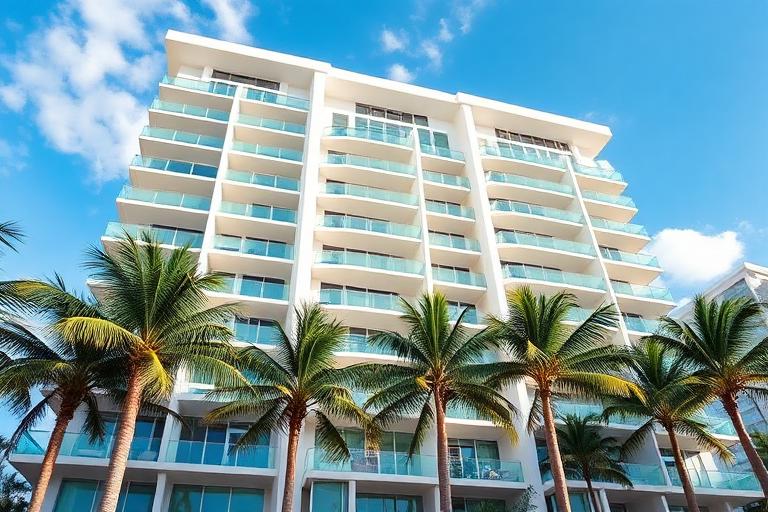
In a condominium, the building determines much of your ownership experience: the age and construction type, the amenities and their upkeep, the association's governance and finances, and the rules that apply to every owner. Two similar units in different buildings can carry very different obligations.
Useful screening questions for any building include the year the certificate of occupancy was issued, the number of habitable stories, whether the building has completed or scheduled a milestone inspection, whether a structural integrity reserve study has been completed, the current leasing rules, and whether any special assessments are pending or approved. You can browse current inventory through our Miami listings search and explore areas through our Miami communities pages. New projects are covered separately on our new developments page.
Step 3 — Contract, Review Period and Inspections
Once you identify a unit, your offer will address price, deposit, closing date, and contingencies such as inspection, financing and association-document review. The specific periods are negotiated in the contract; ask your attorney to confirm what each period covers and when it expires.
For resale units, Florida Statutes section 718.503 (accessed September 12, 2026) entitles a purchaser who has signed a contract to receive, at the seller's expense, current copies of the declaration of condominium, the articles of incorporation, the bylaws and rules, the annual financial statement and annual budget, the inspector-prepared summary of any milestone inspection report if applicable, the association's most recent structural integrity reserve study or a statement that none has been completed, and the association's frequently-asked-questions document. Confirm with your attorney how the statutory review and cancellation rights apply to your contract.
A unit inspection by a qualified inspector covers the interior systems, finishes, windows and balcony areas you will own or use. Building-level condition is assessed separately through the association records described below.
Step 4 — Building-Level Due Diligence
Association documents tell you how the building is governed and funded. The items below are the most common sources of condominium-specific surprises; each should be verified for the specific building rather than assumed.
- Milestone inspection status. Florida Statutes section 553.899 (accessed September 12, 2026) requires a milestone structural inspection for buildings that are three habitable stories or more and subject to condominium or cooperative ownership, generally by December 31 of the year the building reaches 30 years of age and every 10 years thereafter. The local enforcement agency may instead require inspection at 25 years based on local conditions such as proximity to salt water. Ask whether the building is subject to the requirement, when it is or was due, whether a phase-two inspection was required, and what repairs were recommended.
- Structural integrity reserve study. Florida Statutes section 718.112 (accessed September 12, 2026) requires residential associations to complete a structural integrity reserve study at least every 10 years for each building three habitable stories or higher, and addresses how reserves for the studied items are budgeted. Request the most recent study, if one exists, and compare its recommendations with the adopted budget.
- Budget, fees and reserves. Review the current budget, the available fee history and the reserve schedule. Fee levels and reserve contributions vary by building and change over time, so compare the documents rather than relying on general statements about the market.
- Special assessments. Review recent board and membership meeting minutes for approved or discussed assessments and for projects under consideration. Ask the association directly whether any assessment is pending.
- Insurance. Confirm the association's current coverage and the portion of premium reflected in the budget, and obtain your own quote for the unit owner policy you will need.
- Rules. Read the leasing, pet, renovation, parking and occupancy rules in the declaration, bylaws and rules, and ask about any amendments under consideration.
Florida's condominium statutes are administered by the Florida DBPR Division of Florida Condominiums, Timeshares and Mobile Homes (accessed September 12, 2026), which publishes owner and association resources. Questions about how the statutes apply to a specific building should be directed to a Florida attorney.

Step 5 — Closing and Ownership Transition
Before closing, your closing agent will obtain an estoppel certificate from the association confirming the account status of the unit and any amounts owed, complete title work, and prepare the settlement statement. Review the statement with your attorney and confirm the association's move-in, approval and orientation procedures so your first weeks in the building go smoothly.
If the building requires association approval of purchasers, allow time for that process in the closing timeline. Ask your advisor to confirm the application requirements at the offer stage rather than after contract.
How I Support Condominium Buyers
My role as your buyer's advisor is to help you organize this process: identifying buildings that fit your requirements, requesting association records early, coordinating with your attorney, lender and inspector, and negotiating contract terms that give you the review time you need. I do not provide legal, tax or structural-engineering advice; those questions are referred to the appropriate licensed professionals. Learn more about Miami luxury buyer representation, browse Miami homes for sale, or contact me to discuss a specific building.
Related Miami Real Estate Guides
Miami Beach Condos and Homes for Sale: A Buyer's Guide
Compare condominiums, single-family homes and locations across Miami Beach.
Miami Luxury Real Estate
An overview of Miami's luxury property types and how to decide among them.